Experiments with Acrylic Paint

Over the last few weeks I’ve been getting quite messy with acrylic paint. After trying my hand at some Acrylic pouring. The process involes layering paint in a cup or jug and pouring or quickly flipping the paint onto a surface and thentilting the surface to allow the paint to flow over the surface rusulting in some really lovely shapes and patterns.

Here is a link to some experiments I’ve been doing at home.

For this a type of pour I used an old builders trowl I found at my mothers house which worked pretty well to drag the paint across.I used a little water and PVA glue to get the paint to the right consistency.


Residencies & Ones to Watch

Foundation Residencies & Ones to Watch

Digital Residencies 2018

The Jane Phillips Award Digital Residency offers support and promotion for artists, providing online space through its website to develop work, ideas and display new artwork.

It can feature images/documentation of objects, photographs, textiles, art, creative writing, sculpture, oral history, and archival materials. Artists whose practices include performance, sculpture, film, video, new media, video, sonic art, live works and cross-disciplinary practices.

This residency presents an opportunity to an artist/s working with exclusively online practices or who make work using digital processes, wishing to exploring the boundaries of art and technology and the interactions between digital, online spaces and/or their physical materiality.

The selected artists are:

Alex Brooks: 01 July – 30 September 2018

Ink scan 6
Ink scan 6, Alex Brooks

Nathan Mason: 01 October – 31 December 2018


Studio Residencies 2018

Based at the Jane Phillips Award Studio at Elysium Orchard Street Studios, Swansea | In partnership with Elysium Gallery & Studios

An month long opportunity to gain valuable experience in how to manage a studio before moving onto University. A unique opportunity for the selected artists, allowing them complete freedom to display and explore their creativity, ability and imagination in their own space.

The selected artists are:

Izabella Bristow Casey: 31 August – 28 September 2018

IMG_4912
Izabella Bristow Casey


Emily Elias: 28 September – 26 October 2018

Emily Elias 3
Emily Elias

Emily is a young artist exploring the relationship between film and performance art; using media as a means for visual discussion, provoke thought and convey a feeling through immersing her audience into a visual experience. Emily’s ideas are catalysed by a rich theological knowledge, while her work address’ philosophical ideas head on, she is concerned to communicate these through a universal language, while still open to the interpretation of the audience. As she seeks to understand how ethical structures relate to and influence society.

Emily’s most recent work encompasses the values of the Chaos Theory, defined as “The property of a complex system who’s behaviour is so unpredictable as to appear random owing to great sensitivity small changes in conditions”. Endings create space for new beginnings, the Sun must set in order to rise again, chaos is a series of finite events that lead to an infinite measure of time. Exploring Jewish mysticism, biblical stories of creation and the philosophy of choice; the media, projected from a perspective of awe and wonder of the natural world, the work concludes to the notion that,  chaos provides the conditions in which we live our lives, that we create the chaos.


Ones to Watch 2018

New to 2018. The Jane Phillips Award’s aim is to mentor, nurture and support the professional artistic growth of emerging and early career artists across the Visual and Applied Arts. The award will keep in contact with the artists selected as part of ‘Ones to Watch’, keeping an eye on how their work develops in future.

The selected artists are:

Billy Trick

Billy Trick 1
Billy Trick

A suggestion of movement. Like bodies of mass ever so slightly slipping and shifting, unveiling the layers beneath. Creating new lines where a colour begins and ends that lie to the viewer at first glance.


Jasmine Newton


Matt Collier: Artist in Residence Outcomes

Matthew graduated from Swansea, UWTSD in the summer of 2017 with a First Class Honours BA Degree in Music Technology. Working predominately with audio field recordings and found sound objects in the creation of sonic compositions, he also employs novel approaches to utilising technology in sound based live performances and installations.

As a result of having worked for many years facilitating rhythm-based activities primarily with children on the Autistic spectrum, his evolving practice explores the territories of interaction, sensory perception and atypical states of consciousness. Current topics of fascination include Acoustic Archaeology and Acoustic Architecture, the Neo-Confucian principle of Li with its focus on dynamic forms in nature, the neurobiological impact of rhythm entrainment, and the intriguing phenomena of Apophenia and Audio Pareidolia.

Matt was the first Sonic Art practitioner to receive a Jane Phillips Award Residency. The residency took place from 01 November – 10 January 2018 and the outcomes can be seen at Mission Gallery’s ‘the […] space’ until 11 February 2018.

For more information on Matt’s work in the […] space, please click here

matthew-collier-sounds

Brett Swenson has arrived!

2017 JPA International Residency recipient.

Brett Swenson is a multidisciplinary artist based in Brooklyn, New York, who will be supported by the Glass Department at Swansea College of Art, UWTSD during his stay here in Swansea. He has previously been awarded residencies from Residency Unlimited and Urban Glass, both New York 2016 and ‘RAMDOM Assosciation’s Investigation on the Extreme Land: DEFAULT, Italy, 2015.

Brett will be based both at the Jane Phillips Award studio at Elysium Orchard Street Studios as well as at the Glass Department at Swansea College of Art UWTSD.

For more information on Brett’s practice, please click here

THANK YOU

RESIDENCY: 

R- aising personal awareness of the historical links in my local area through my educational investigation, incorporating historic walks and visits. 

E- ncouraging my personal artistic development, research and recording methods. 

S- upplying me with a new platform to record and display my findings. 

I– nvestigating various themes allowing me to appreciate Brecon as a town through its beauty and character. 

D- eveloping skills which will be used for my degree and to further my abilities. 

E- xhibition planning, collaborating and curation opportunity, allowing me to understand the basic requirements and skills required for the task. 

N- iche work and appreciating the art of others.

C- hallenges! – and knowing when to stop, review and re-evaluate. 

Y- ou, thank you to all and everyone who has guided me, supported and provided me with information and imparted their knowledge to further my findings. To all who have watched the project develop and finally to the Mission Gallery and the ‘Jane Phillips’ residency for providing me with this opportunity and encouraging my thirst for creating. Thank YOU! 
 

‘Characters of Brecon’ (2 of 2)

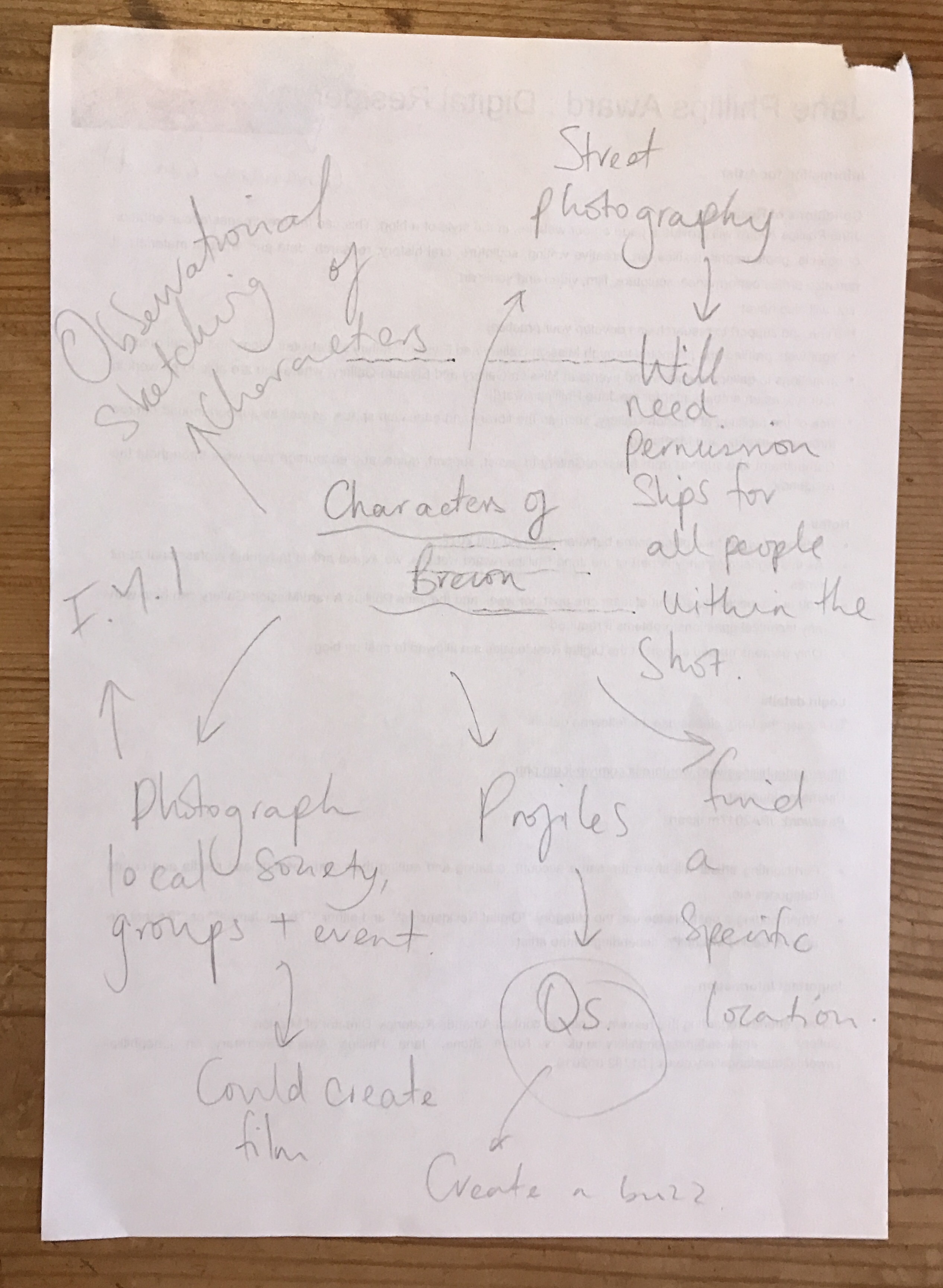
Rough notes – possible experiments

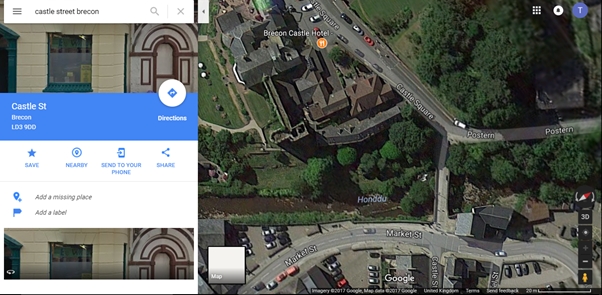
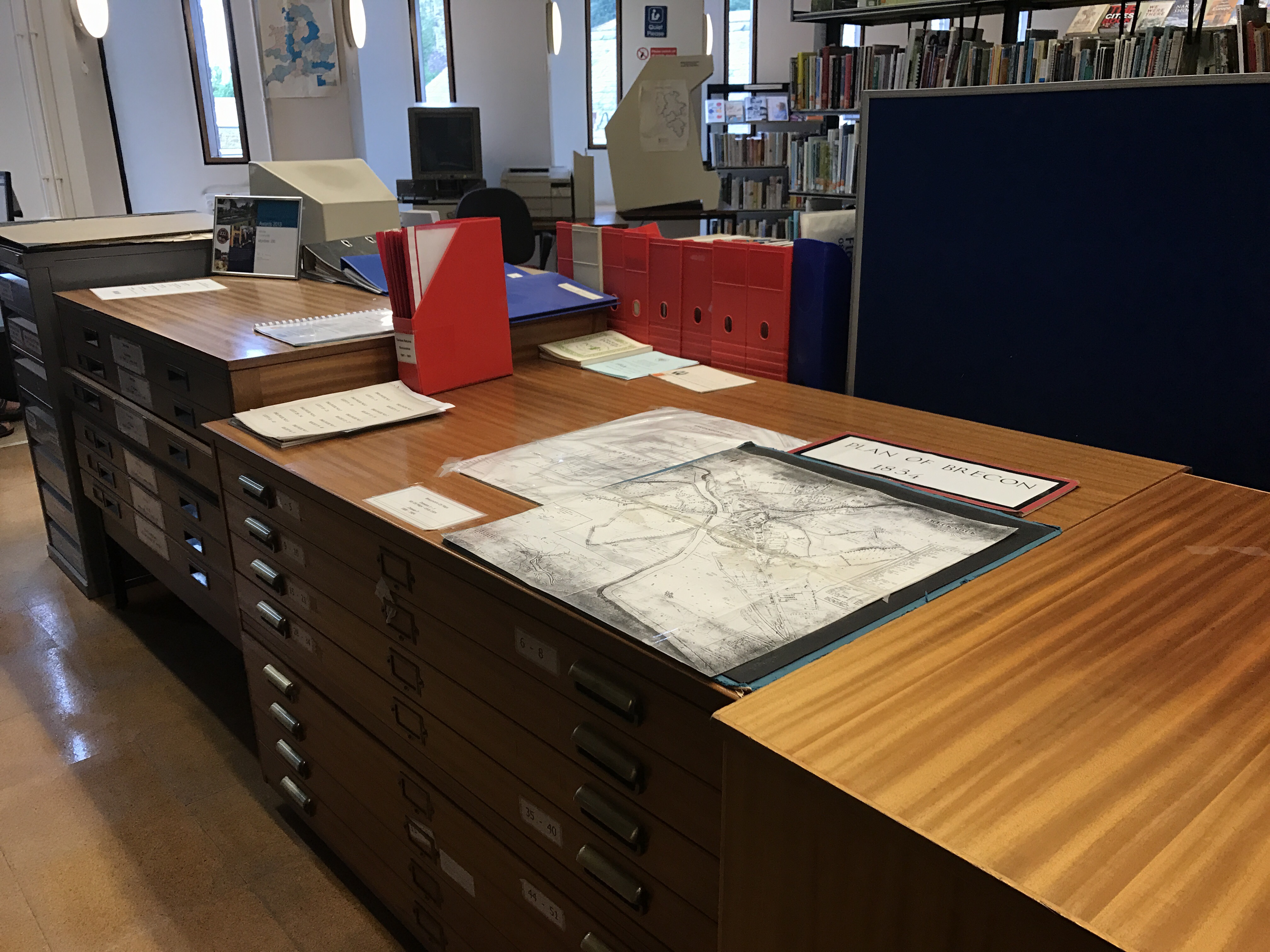
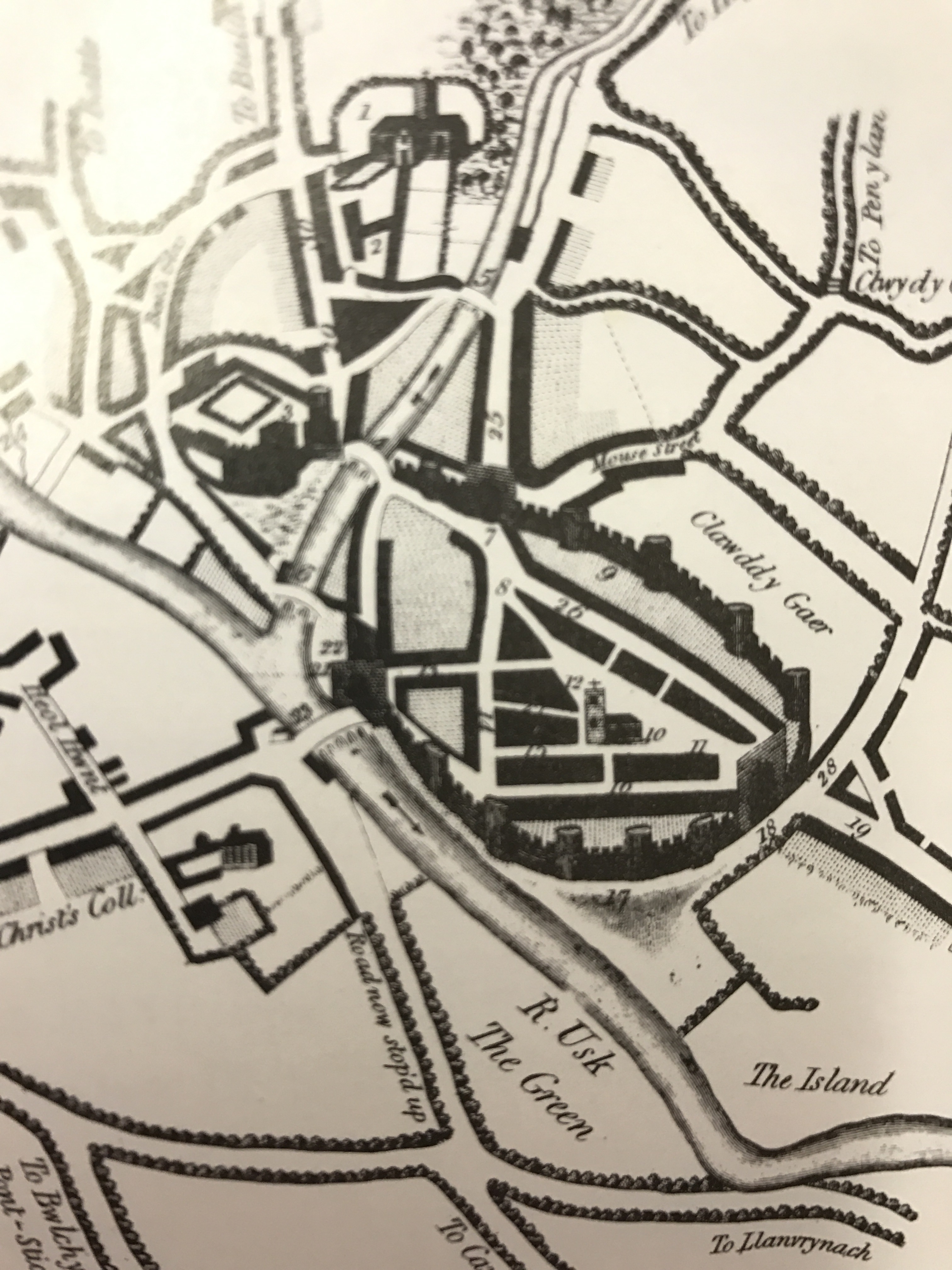
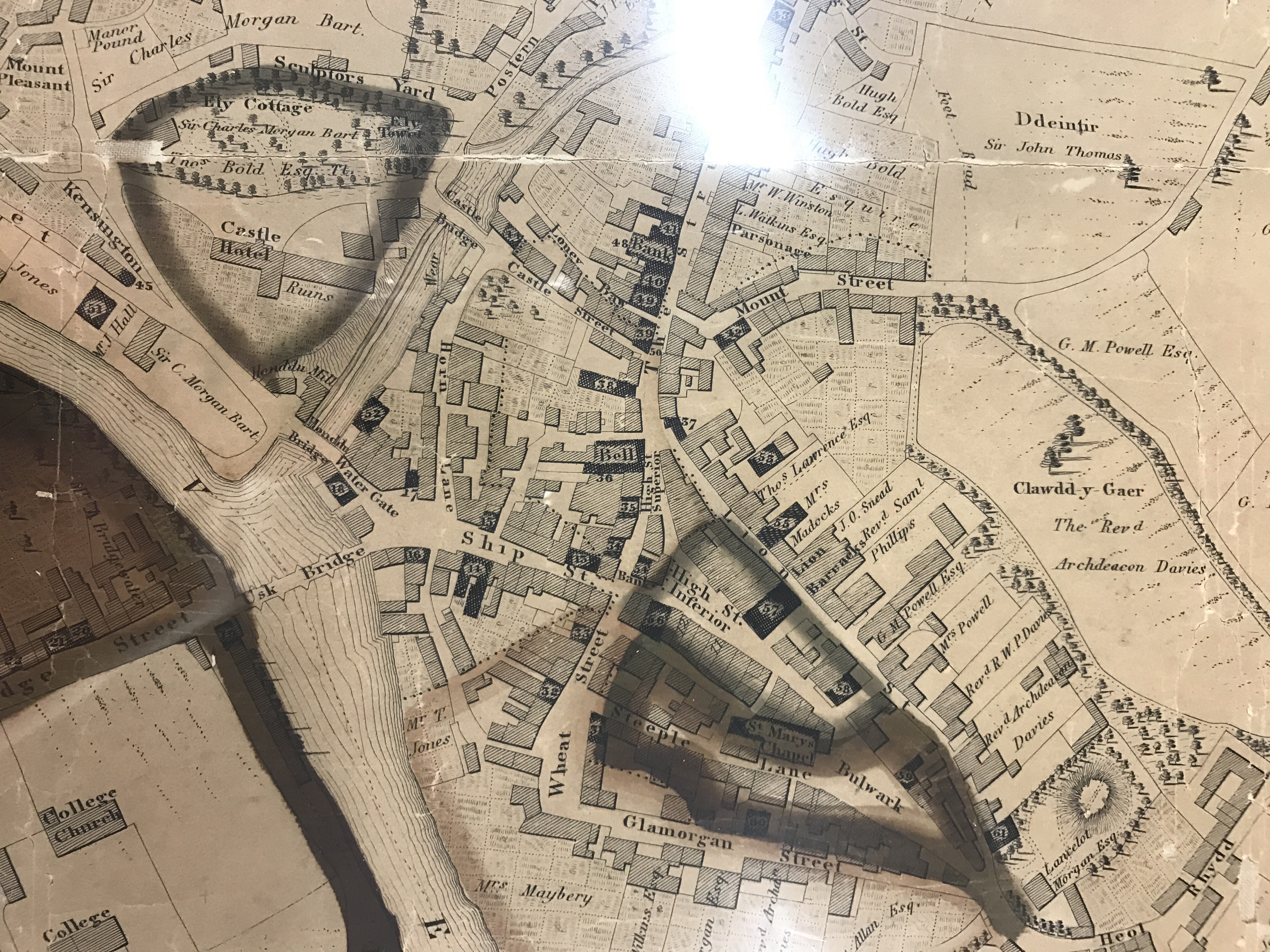
My original thought of recording Brecon’s characters, its environment and ‘a year in the life of’ by visiting many locations making records through photography, video, discussion attempting to incorporate many mediums of record taking was diverted one afternoon whilst walking up ‘Castle Street’ and capturing an image of a couple sitting on a bench on the Castle bridge (see map below sourced from google maps).

Having discussed the reason for the photograph with the people captured in the shot and the willingness of the couple to take part in the record I made the judgment that I would attempt to repeat the image structure with differing personalities that I may find using the facility, thus recording a similar image within the same environment.

This will be recorded throughout the year and I aim to capture a variety of Brecon’s personalities and hope that the images will represent the changing seasons through the body language and mis-en-scene (e.g. environment/ clothing).

Note to myself: I need to ensure I gain the permission to post images within this project. I will be creating small cards to ensure I have documentation stating they are happy with this as well as providing them with knowledge as to the purpose of the photograph whilst also possibly encouraging them to view the blog and witness the projects’ development.

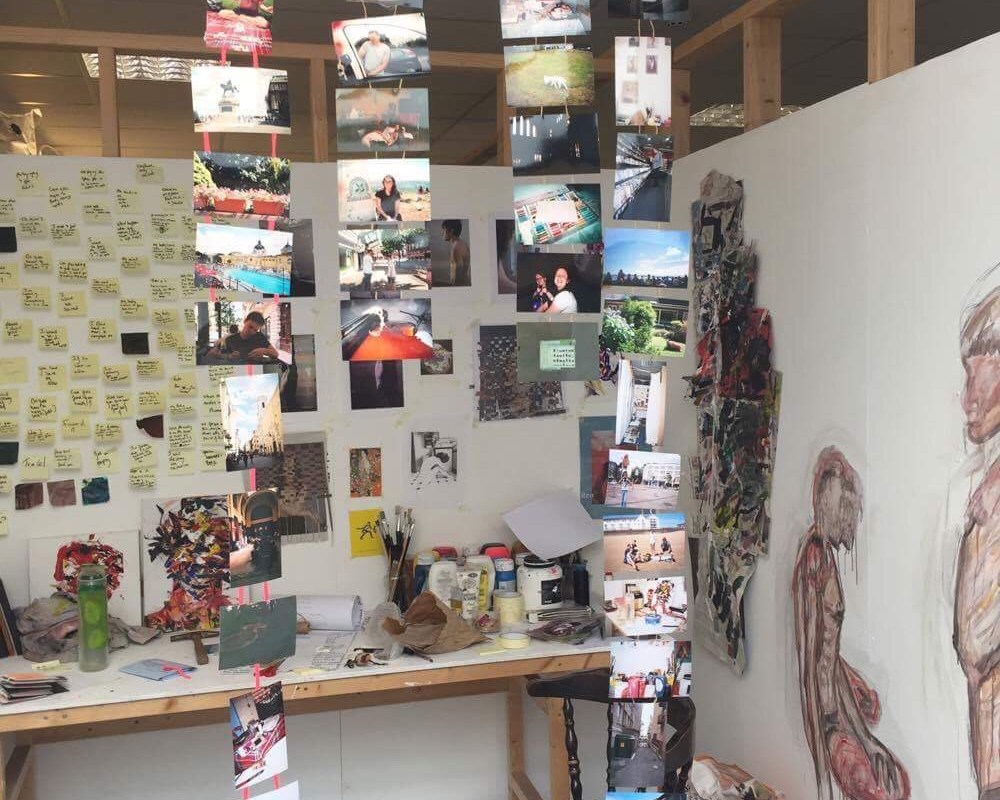
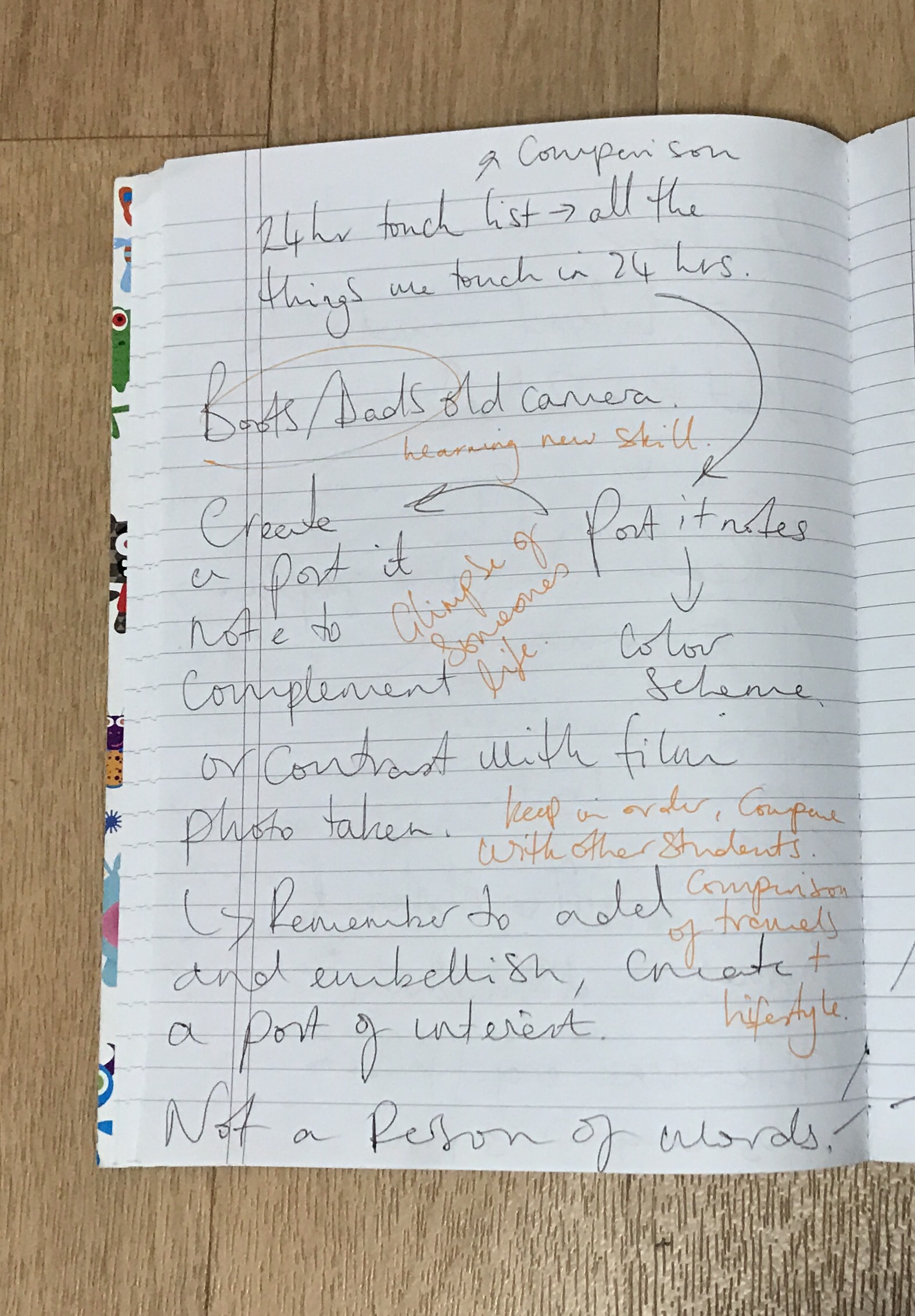
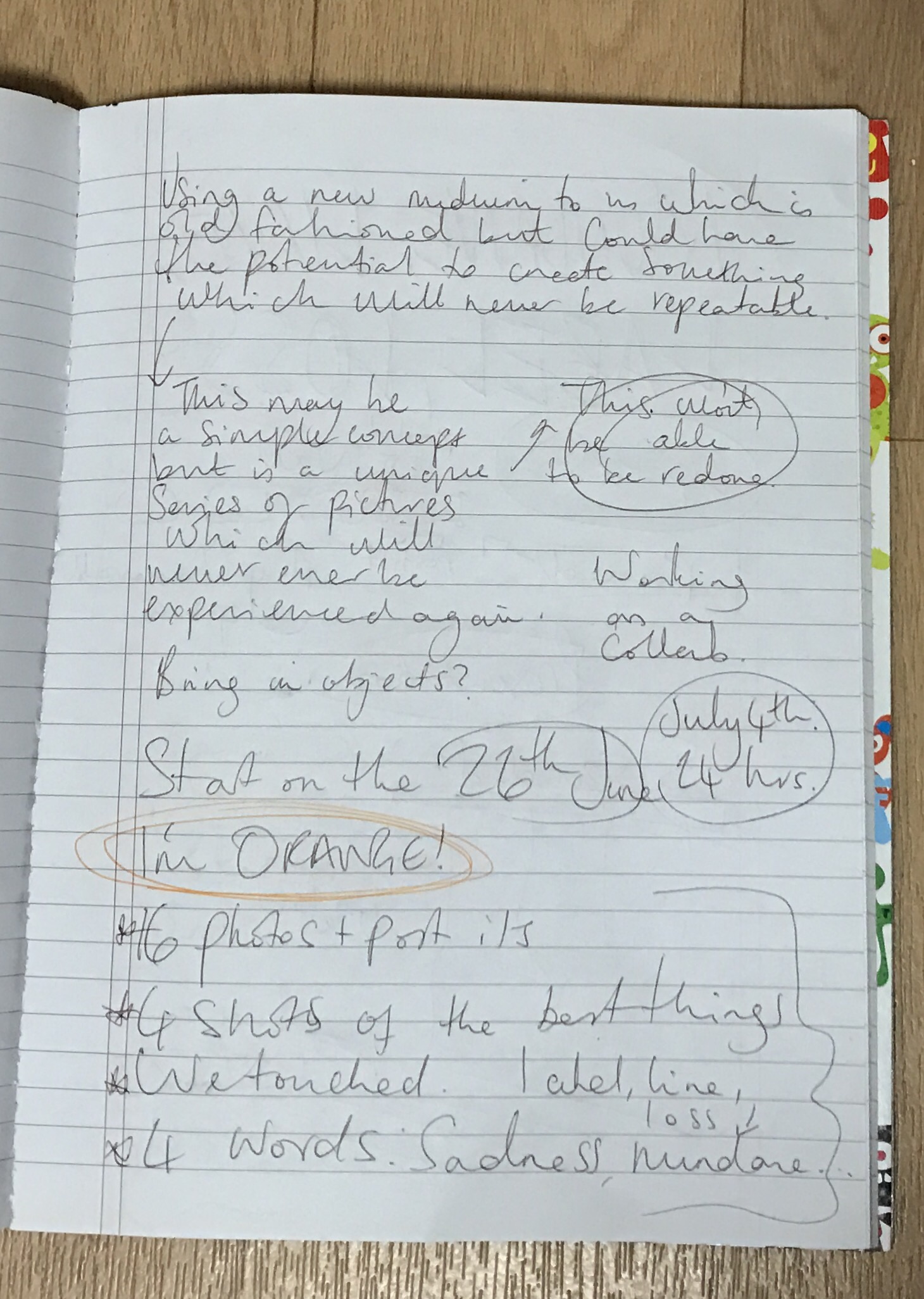
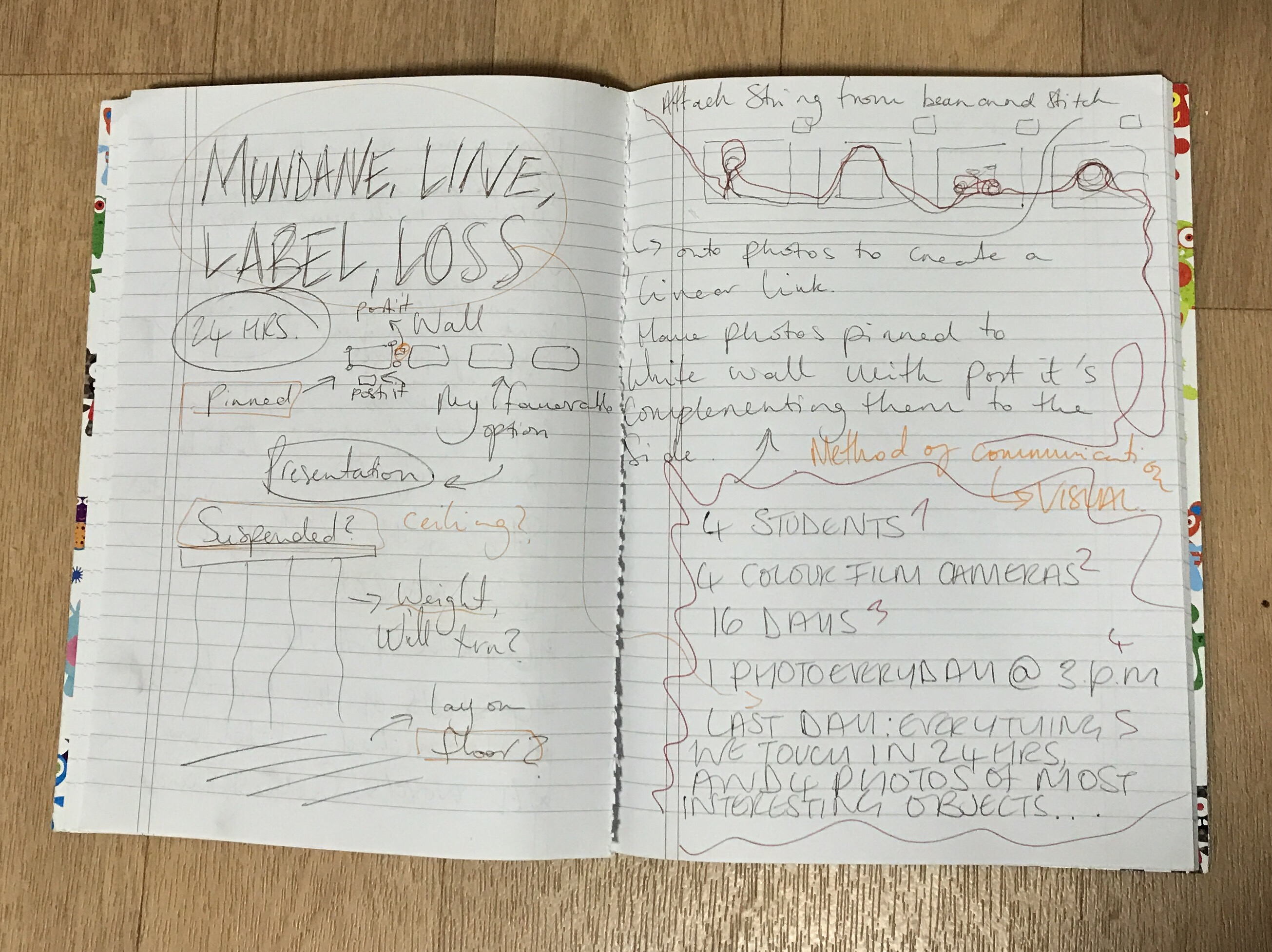
After collaborating with my peers, in the recent ‘Open studios’ exhibition, where we recorded a series of time periods using film cameras I have chosen to complete this experiment using only this medium as I feel that this is capturing a single, unique frame in time that can never be recreated due to its spontaneity. The duplication of the captured picture frame and communication with new models ensures that each picture is a new experience, never to be repeated due to the differing time scales and mis-en-scene.

I hope to visit this location as often as I can throughout the year at varying seasons and times throughout the day therefore, capturing everyday moments of the characters of Brecon.


Post and Postcards

In this post I will be further examining my practise by looking at my fascination with post and postcards. In previous posts I have looked at other tools I use in my work such as Labels and Instagram 

I have always loved getting post! I sign up for as many catalogues as I can to feed my obsession. I wrote to the Queen when I was 11 and was overwhelmed by the beautiful gold stationery that housed the response. Furthermore, every Christmas I receive a parcel that excites me more than any other. It is from a friend in Japan. It amazes me how different the stationary is, the parcel is packaged, and the postal service labels are. Recently, I have been sorting through my massive postcard collection and have found that 148 x 105 mm or 5.8 x 4.1 inches (the standard size of a postcard) is perfect for so many things. Below, I will show some examples of postcards from my collection and postal experiments I have been trying.

NO.1

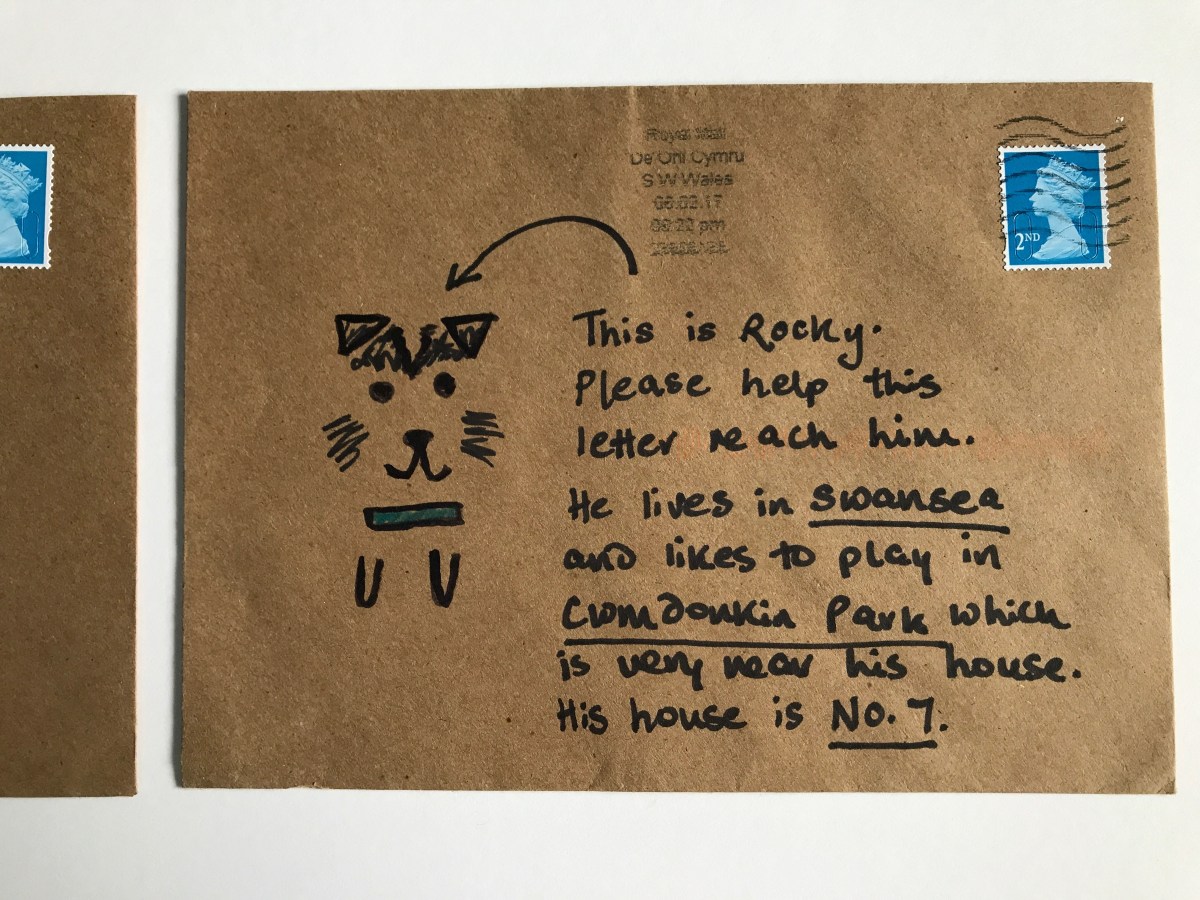
I was introduced to the book “The Englishman Who Posted Himself and Other Curious Objects” and the work of W. Reginald Bray during my foundation course. I read and began trying out some of his experiments for myself as a personal project.

W. Reginald Bray

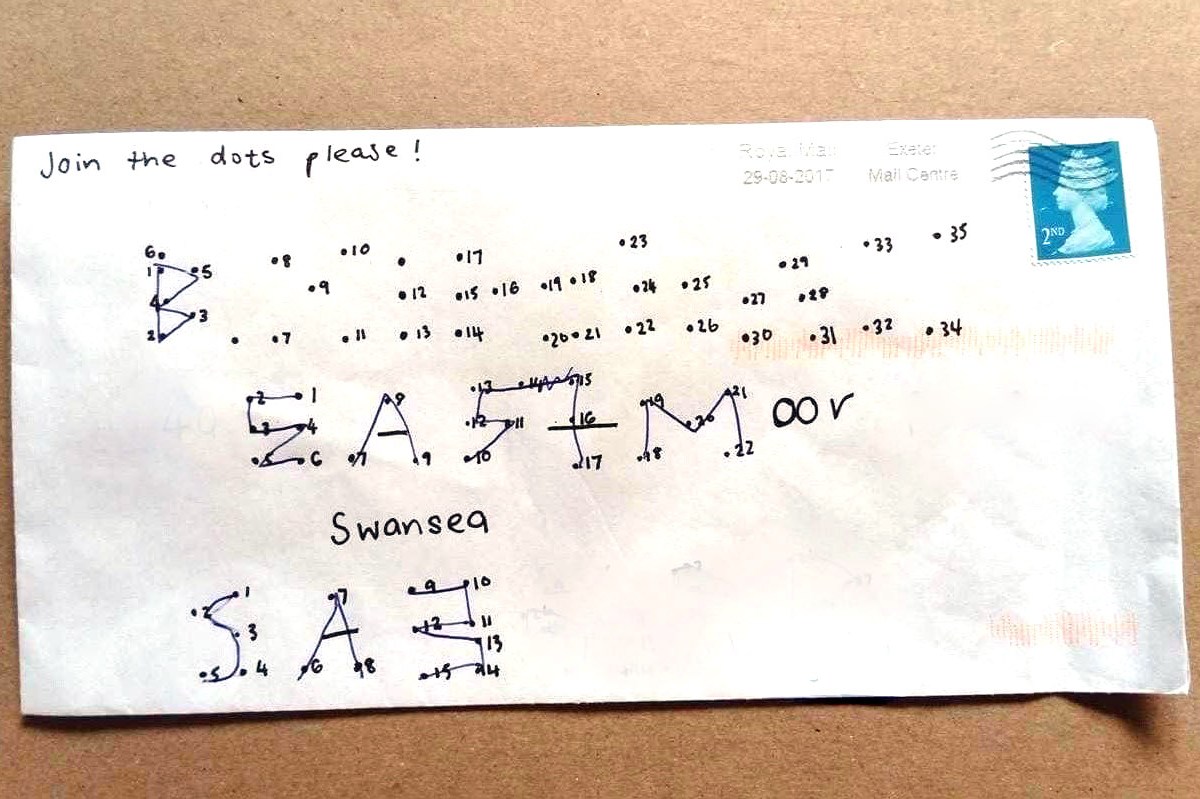
“In 1898, Bray purchased a copy of the Post Office Guide, and began to study the regulations published quarterly by the British postal authorities. He discovered that the smallest item one could post was a bee, and the largest, an elephant. Intrigued, he decided to experiment with sending ordinary and strange objects through the post unwrapped, including a turnip, abowler hat, a bicycle pump, shirt cuffs, seaweed, a clothes brush, even a rabbit’s skull. He eventually posted his Irish terrier and himself (not together), earning him the name “The Human Letter.” He also mailed cards to challenging addressessome in the form of picture puzzles, others sent to ambiguous recipients at hard to reach destinationsall in the name of testing the deductive powers of the beleaguered postman.”

Examples of some of my successfully posted and yet unposted work can be found below.
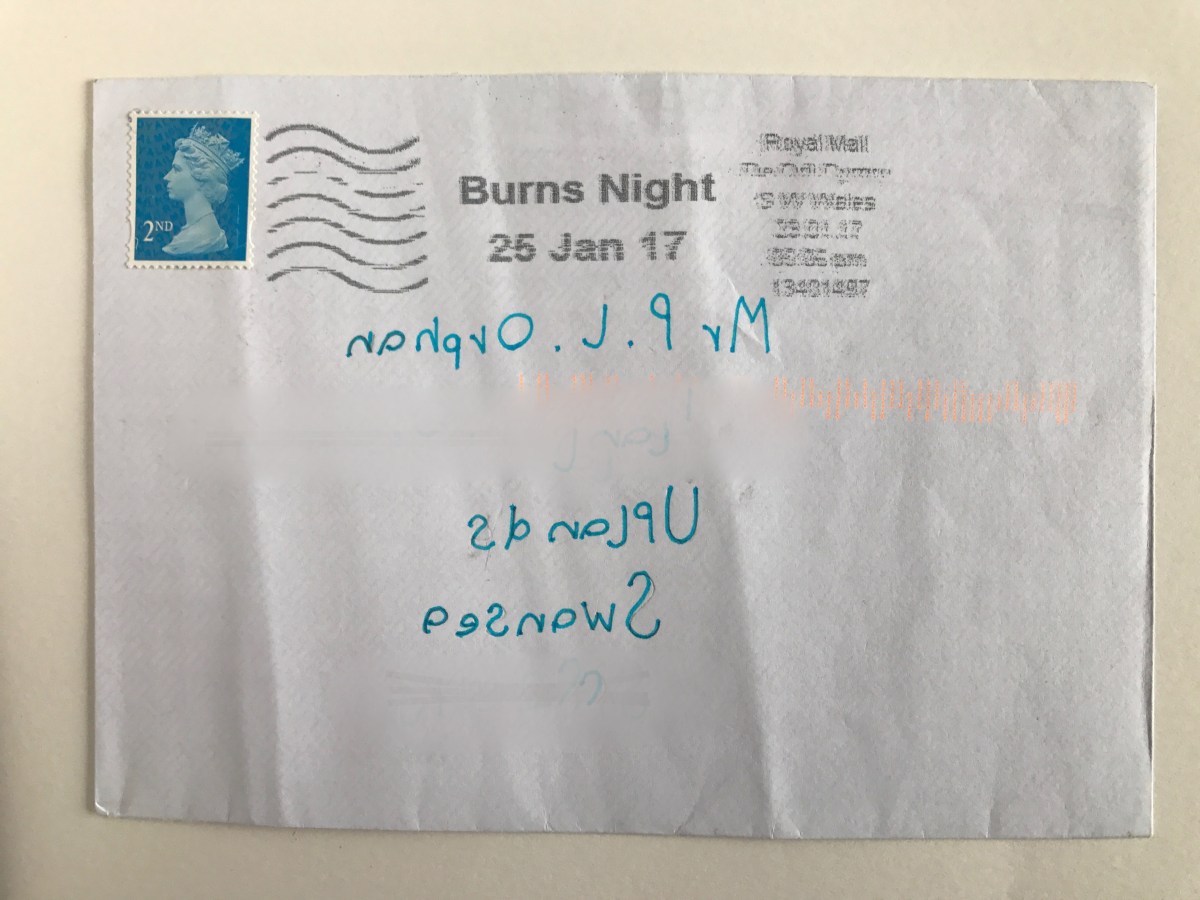
IMG_0359IMG_6612IMG_1083IMG_5903

I think I will continue to enjoy taking inspiration from Bray’s work. A few weeks ago, I discovered an artist who has a similar passion for testing the postal service. Examples of Harriet Russell’s work can be found below along with a surprisingly  successful piece I created in Russell’s style and sent to Beckie. I am already planning my next challenge.
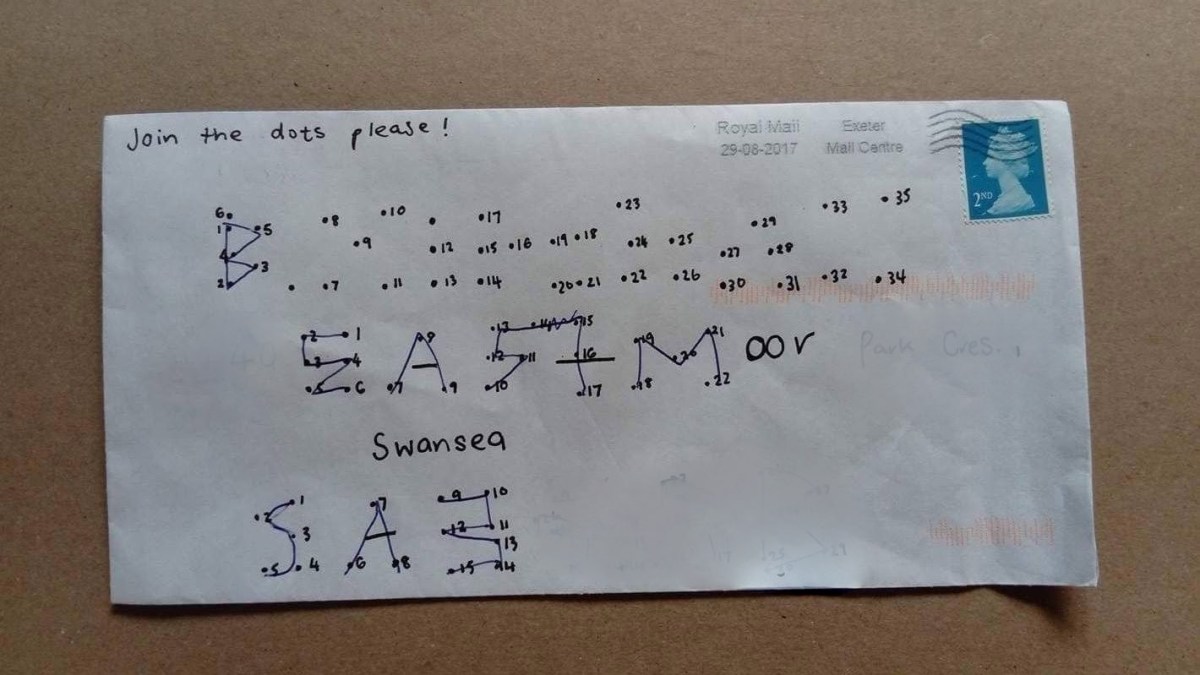
 

IMG_3096

NO.2 

Postcards are the best form of affordable art! When I visit an exhibition that I especially love it is great to buy a postcard as a memento. I am slowly building up an ‘inspiration hoard’ to bring to university with me. This will mostly be made up of postcards from my favourite exhibitions. Below is an example of a book of postcards I bought at a recent Rembrandt exhibition and a postcard Beckie sent me when she went to the RA Summer Exhibition. I will send Beckie and other artist friends postcards I think will inspire them from exhibitions I see this year. It’s a fun way to keep in touch!
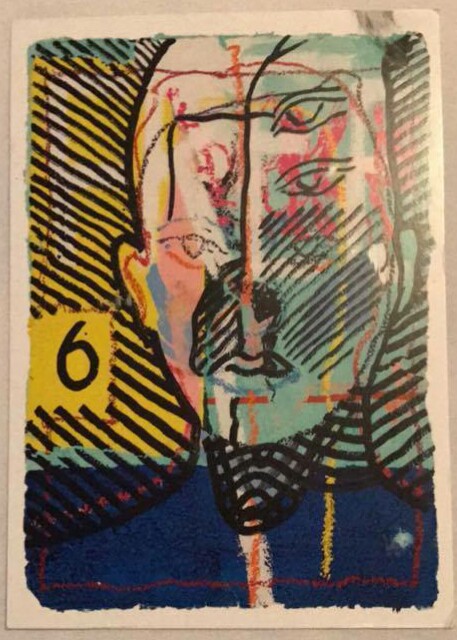
 

_20170904_151039

No.3

Over the years my family and I have been sent many postcards from friends and family who are on their holidays. Memorably from a 97 year old friend who recently made me very jealous with a postcard from the Northern Lights! We also continue to send holiday postcards ourselves. Some people wonder what the point is when we can easily send photos over the internet and often arrive home before the postcards. In one particularly memorable case my Aunty Gwyn received a postcard from a trip we went on to Rome a year after we posted it because of the notoriously slow Italian postal service. For reasons of nostalgia and the opportunity to have a handwritten note to show you are remembered by a loved one is reason enough to not let the holiday postcard die out. There are also some fun varieties to try out! When I was in Hungary this summer to test some fun variations I sent Beckie and my family a variety of different postcards:

the giant postcard (An A4 image that baffled the Hungarian postal workers and also doubled as a lovely souvenir as it can be easily displayed.)

the digital postcard ( A postcard created with the app Postsnap that allows you to use your own photos (as a photographer I love this!). It is then printed and sent. A lovely idea to make the postcard even more personal.)

the postcard coaster (Another souvenir/postcard. A beautiful illustrated coaster that can be addressed on the back.) Images below.

No.4

I love freebies! Some of my favourite postcards are those I have got for free. Examples are below.

No. 5

Probably inspired by the above, I created a range of postcards recently for some Christmas events my church was hosting. They are the perfect size for an eye-catching advert! The front and backs of three of these postcards are shown below.
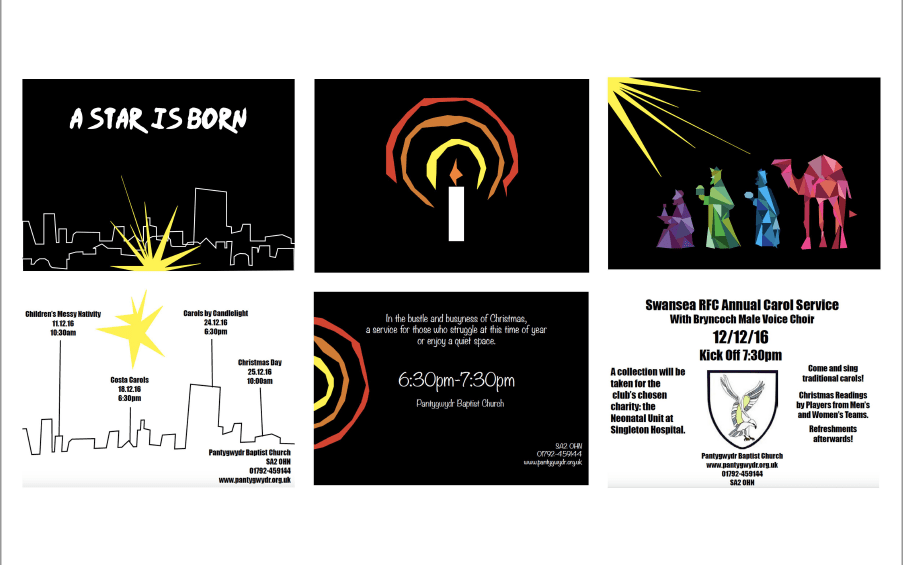
Screen Shot 2017-09-06 at 11.59.44

No.6

And finally, I would like to take the chance to reflect on mine and Beckie’s postal adventure! I have had such a lot of fun creating and receiving postcards. It has challenged me to be creative in so many ways. Our project was inspired by the work of artists Giorgia Lupi and Stefanie Posavec but has become so much more than just a ‘dear data’ experiment. Beckie’s infographic postcards (which can be found on this blog) have taught me so much about her. I am going to use them as inspiration for my infographic work. I hope we can continue to send each other postcards and stay in touch as we start our degrees. Below are some of the postcards and letters I sent to Beckie.
This slideshow requires JavaScript.